
Solar Dryers in Kenya: The Complete Guide for Agribusinesses in 2026
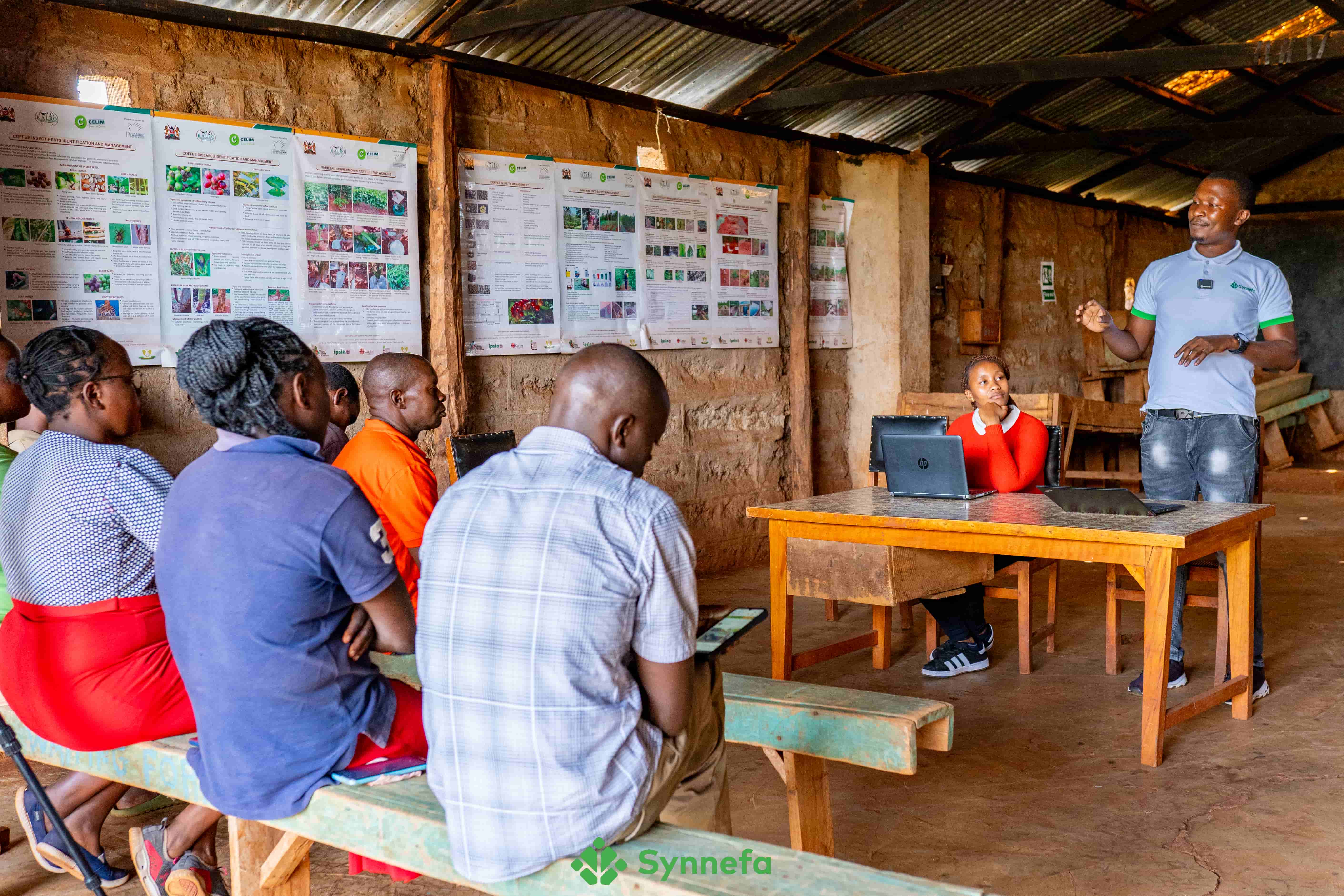
Why Solar Drying Matters for Kenyan Agriculture
Kenya loses between 30% and 40% of its agricultural output to poor post harvest handling every year. For a country where agriculture contributes over 20% of GDP and employs more than 40% of the total population, these losses represent billions of shillings in wasted income. The single biggest cause of these losses in grains, herbs, fruits, and vegetables is inadequate drying. Traditional methods such as open air sun drying on tarps, rooftops, or bare ground expose crops to rain, dust, insects, and contamination. The result is low quality produce that fetches lower prices or is rejected entirely by buyers and export markets.
Solar dryers solve this problem by creating a controlled drying environment that uses solar energy to remove moisture from crops efficiently and hygienically. Modern solar dryers can reduce drying time from 7 to 14 days (traditional methods) down to 2 to 3 days while maintaining or improving crop quality, colour, nutritional value, and shelf life.
How Solar Dryers Work
A solar dryer captures solar radiation and converts it into heat, which is then used to remove moisture from agricultural products. The basic principle involves three elements: solar energy collection, controlled airflow, and moisture extraction. Solar collectors (often transparent roofing or panels) trap heat inside the drying chamber. Air heated by the sun is circulated through the crops, either naturally (passive dryers) or with fans (active dryers). As warm air passes over the crops, it absorbs moisture and carries it out of the dryer through vents.
Smart solar dryers, like those built by Synnefa, add a fourth element: IoT sensors and real time monitoring. These sensors track temperature, humidity, and airflow inside the dryer and transmit data to a mobile app and dashboard through FarmShield, our IoT monitoring system. This allows farmers and agribusinesses to monitor the drying process remotely and make adjustments without being physically present at the dryer site.
Types of Solar Dryers Available in Kenya
There are three main categories of solar dryers used in Kenyan agriculture, each suited to different scales and budgets.
Direct solar dryers are the simplest and most affordable. The crop is placed inside a transparent chamber where sunlight hits it directly. These are suitable for small scale farmers drying small quantities of herbs, fruits, or vegetables. They cost between KES 20,000 and KES 100,000 depending on size and materials. The downside is limited control over temperature and airflow, which can lead to uneven drying and some quality loss.
Indirect solar dryers separate the solar collector from the drying chamber. Air is heated in a separate unit and then blown into the chamber where crops are placed on trays. This prevents direct sunlight from hitting the crops, which preserves colour and nutritional content. These are better suited for cooperatives and agribusinesses processing herbs, coffee, or spices for export markets where quality standards are strict.
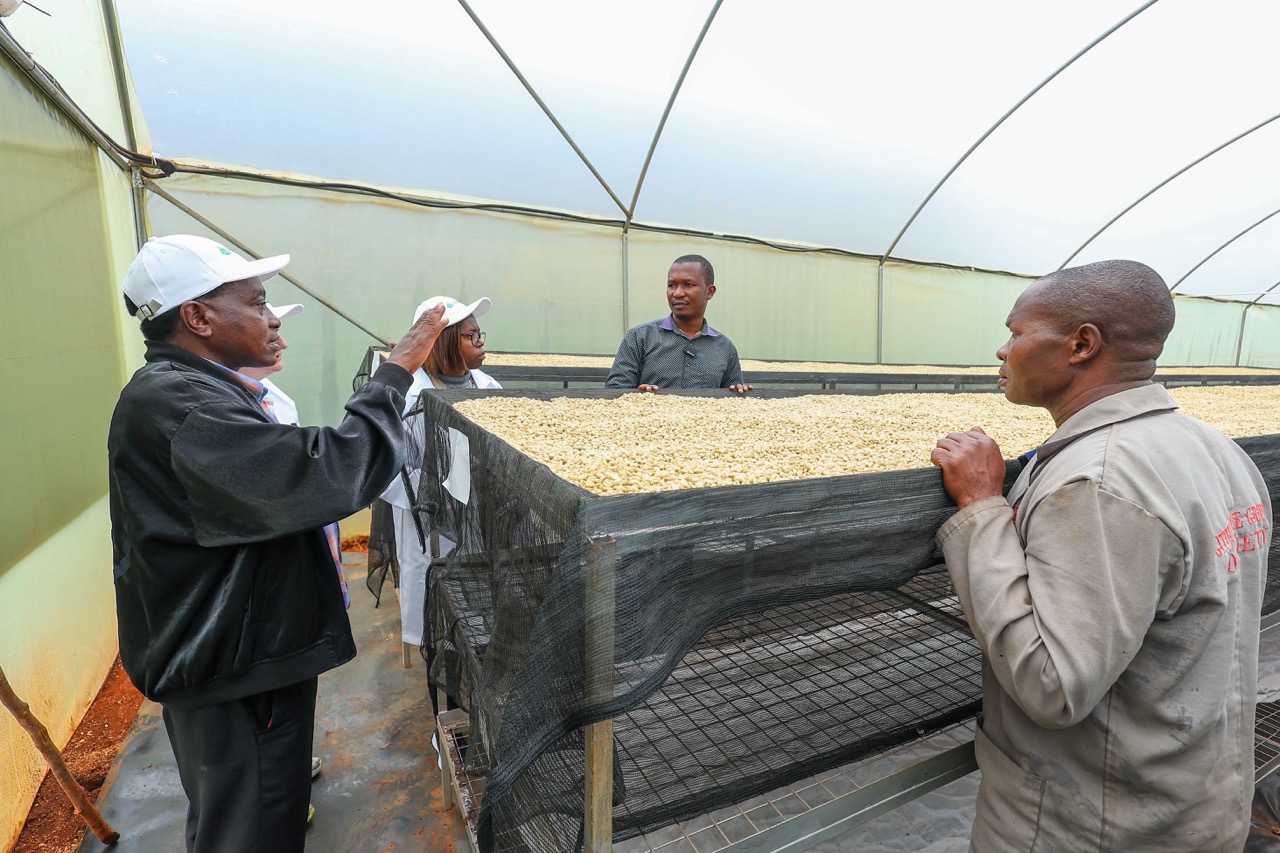
Smart solar dryers (hybrid active systems) combine solar heating with electric fans, IoT sensors, and automated controls. Synnefa's Smart Solar Dryer falls into this category. It uses greenhouse technology for solar capture, energy efficient fans for forced airflow, and FarmShield IoT sensors for real time monitoring of temperature, humidity, and drying progress. These dryers are designed for cooperatives, agribusinesses, social enterprises, and research institutions that need consistent, high quality drying at scale. The rent to own financing model makes them accessible without large upfront capital expenditure.
What Crops Can You Dry with a Solar Dryer?
Solar dryers in Kenya are used across a wide range of agricultural products. The most common include maize (the staple crop, requiring moisture reduction from 20 to 25% down to 13% for safe storage), coffee (both parchment and cherry, where drying quality directly affects cup score and export price), herbs (basil, rosemary, mint, and other herbs grown for export to European markets), fruits (mangoes, bananas, pineapples, and passion fruit for dried fruit products), vegetables (tomatoes, kale, cabbage, and onions), spices (chillies, turmeric, ginger), pulses (beans, green grams, cowpeas), and fish (tilapia and Nile perch, particularly around Lake Victoria). Each crop has specific temperature and humidity requirements for optimal drying. Smart dryers with IoT monitoring can be calibrated to these requirements, which is particularly important for export quality products where buyers test for moisture content, aflatoxin levels, and colour consistency.
Cost and ROI of Solar Dryers in Kenya
The cost of a solar dryer in Kenya varies significantly depending on the type and capacity. Basic direct solar dryers start from KES 20,000 for small household units. Mid range indirect dryers for small cooperatives range from KES 150,000 to KES 500,000. Commercial scale smart solar dryers like Synnefa's units, which include IoT monitoring and can handle larger volumes, are priced higher but are available through rent to own financing that eliminates the need for large upfront investment. See our pricing page for current options. If upfront capital is the constraint, our guide to financing a smart solar dryer in Kenya compares rent-to-own, bank asset financing and drying-as-a-service in detail.
The return on investment for a solar dryer comes from three sources. First, loss reduction: if a cooperative dries 10 tonnes of maize per season and currently loses 30% to poor drying, a solar dryer that reduces losses to under 5% saves approximately 2.5 tonnes of maize. At KES 4,000 per 90kg bag, that is roughly KES 111,000 saved per season. Second, quality premiums: properly dried crops command higher market prices. Solar dried herbs can fetch 20 to 40% more than traditionally dried alternatives in export markets. Third, time savings: reducing drying time from 7 to 14 days to 2 to 3 days means faster turnover and the ability to process more batches per season. Read more about the real cost of post harvest losses in Kenya.
How to Choose the Right Solar Dryer
Selecting the right solar dryer depends on four factors: the crops you are drying, the volumes you handle, your quality requirements, and your budget. For smallholder farmers drying for household consumption or local markets, a basic direct solar dryer is sufficient. For cooperatives and agribusinesses selling to premium or export markets, an indirect or smart solar dryer is worth the investment because the quality improvement directly translates to higher prices. For organisations working with multiple farmer groups across different locations, a smart solar dryer with remote monitoring capabilities allows centralised oversight of drying operations without requiring a technician at every site. Learn more about how smart solar dryers compare to traditional drying methods, and use our practical sizing guide to match dryer capacity to your harvest volumes before you request a quotation.
If you are evaluating solar dryers for your operation, request a pre site survey from Synnefa. The survey assesses your crop types, volumes, location, and budget to recommend the right dryer configuration and financing structure for your specific needs.
Getting Started
Solar drying technology is no longer experimental in Kenya. It is a proven, commercially viable solution used by cooperatives, agribusinesses, and development programmes across the country. The question is not whether to invest in solar drying, but which system fits your operation and how quickly you can start reducing losses and improving crop value. Visit our Smart Solar Dryer page to learn more about smart solar drying solutions, or request a consultation to discuss your specific needs with our team.
Similar posts
How Aggregation Hubs and Cooperatives Turn Crop Drying Into a Business
One smart solar dryer serving hundreds of farmers: how aggregation hubs work, who should run them, and what cooperatives, counties and funders should look for before investing.
Beyond Maize and Coffee: Drying Cassava, Ginger, Hibiscus and Herbs for Premium Markets
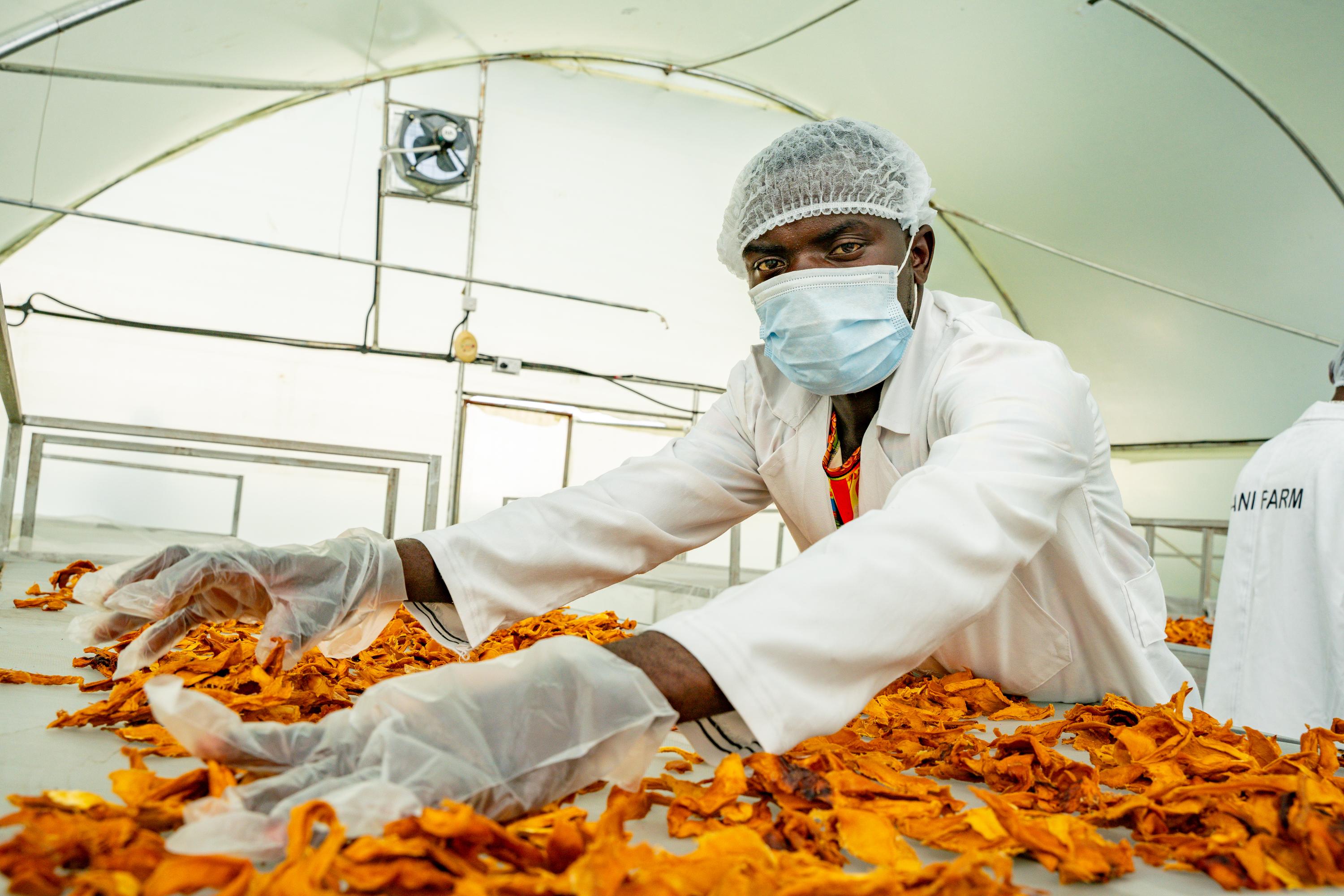
One smart solar dryer can serve many value chains. What it takes to dry cassava, sweet potato, ginger, hibiscus, herbs and vegetables to the standards premium buyers demand.